Why a Short Lane Walk Can Feel Like a Proper Outing
A short lane walk can feel like a proper outing when one modest destination gives it purpose, a natural turning point, and room to notice the way.
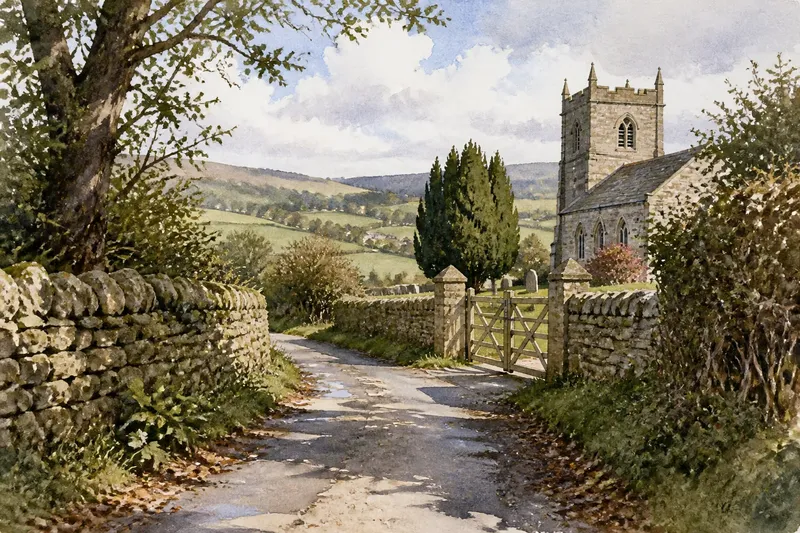
You set the kettle on, then spot the church gate at the end of the lane, its latch bright against the old wood. A short lane walk can feel like a proper outing when that gate becomes the reason to leave, not one stop on a route crowded with errands. Choose a modest destination, give yourself time to reach it, and let the walk be small on purpose.
Choose one destination with a clear sense of arrival
A destination does not have to be remarkable. It only needs to give the walk a shape you can recognize: the footbridge over the beck, the village noticeboard, a bench beside the green, or the bend where the hedges open onto fields. The useful question is not “How much is there to do?” but “Will I know when I have arrived?”
Look for a place with a visible cue. A gate, sign, seat, bridge, or change in the lane makes a satisfying turning point because you can see it approach. A vague aim such as “walk around a bit” can still be pleasant, but it may leave the outing feeling unfinished. A named place gives you a small promise to keep.
Keep the destination modest enough that getting there is the main activity. If the churchyard is open to visitors, perhaps you want to pause at its entrance. If the village shop is on the lane, perhaps the purpose is simply to look at the window display, not to add a shopping list. Check opening access where it matters, and respect signs, gates, and private land.
Let the lane supply the middle
The part between home and destination does not need extra attractions. It is already doing its work. A pale strip of sunlight on a wall, a blackbird in the hedge, or the smell of damp leaves after rain can make a familiar stretch feel newly noticed. There is no need to turn each observation into a stop or photograph.
A simple pace helps. Walk slowly enough to hear the gravel under your shoes and to move aside comfortably when a car or cyclist comes through. On narrow lanes, be visible and give traffic room; if the route feels unsuitable for walking, choose a safer public path instead. A short outing should feel easy to adapt, not like a test of determination.
Weather can change the texture of the same lane without calling for a new plan. On a bright day, the destination might be the shaded side of the green. In drizzle, it could be the covered bus shelter, with a hood and shoes suited to wet ground. Carry what the conditions call for, and turn back if the lane becomes uncomfortable or unsafe.
Make arrival a small pause, not another task
When you reach the destination, give yourself a moment before heading home. Sit if there is a public bench, read the noticeboard, or simply watch the light shift across the field. The pause need not be long. Its purpose is to mark arrival, so the walk has a beginning, a middle, and a place where you can let the day settle.
Say you leave a cottage after lunch with the old stone bridge as your sole destination. You take the lane at an easy pace, notice where the hedges give way to a stream, and pause on the public side of the bridge to listen to the water. Then you return by the same route. The outing has a clear center, while the walk itself remains uncomplicated.
There is no need to bring a picnic, make a record, or find a new route home. A small flask of tea may suit a chilly afternoon, but carrying nothing can be just as satisfying. Let the destination decide whether a pause would be welcome, rather than packing for every possibility.
How do you keep a lane walk simple?
Should the destination be somewhere new?
No. A familiar place can feel different when it is the day’s one destination. You may notice a gatepost, a view, or a stretch of birdsong that usually slips past while you are on an errand.
Is a walk still an outing if you turn back early?
Yes. The destination gives the walk a shape, but it does not obligate you to reach it. If the weather turns or you feel tired, turning home is a sensible choice, not a failure to complete a route.
What if the lane has no bench or place to sit?
Choose a safe, public spot where you can pause without blocking a gate, path, or road. If there is nowhere suitable, make the arrival itself the pause: look around, take a breath, and begin the return.
How can I make the walk feel different next time?
Keep the same destination and notice one changing detail, such as the hedge flowers, the condition of the path, or the light on the roofs. That small focus gives a repeat walk its own character without requiring another stop.
Let the return complete the outing
Returning the same way is often the simplest choice. The lane looks different from the opposite direction, and you can walk without wondering where the next turn leads. If a public alternative is close by and clearly suitable, it can add variety, but a loop is not more worthwhile merely because it is longer.
When you get home, leave the walk finished. Take off muddy shoes, hang up a damp coat, and put the kettle back on if you like. No special account of the outing is required. The destination has given a little shape to an ordinary stretch of time, and the short lane walk has been enough.
For the next short lane walk, choose a place you can name before you step outside. That small decision is often all the planning a proper outing needs.