A Jigsaw or a Book for a Rain-Kept Afternoon?
Choose a jigsaw or a book for a rain-kept afternoon by matching the mood, company and attention you have to the kind of indoor rest you want.
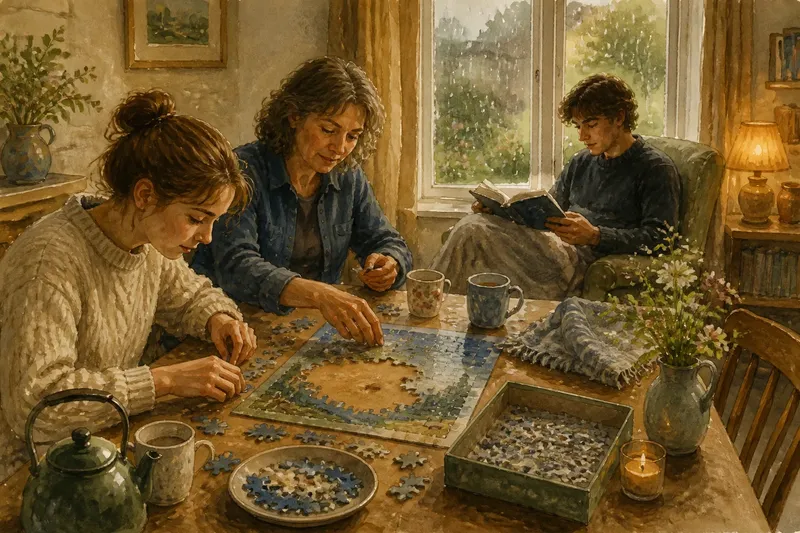
The rain has settled against the windows, the kettle is warm, and someone has brought a book while another person reaches for the puzzle box. Choosing a jigsaw or a book for a rain-kept afternoon is less about finding the “better” pastime than noticing what kind of company and attention the room can hold.
Start by matching the activity to the afternoon
A jigsaw gives people a shared place to gather, even when they are not talking much. One person sorts edge pieces; another tries a patch of blue; someone else wanders back after making tea. The picture becomes a common thread, and nobody needs to contribute at the same pace.
Reading offers a quieter, more private rhythm. It suits a person who wants to follow a thought without interruption, or a household whose members are glad to spend time together without doing the same thing. A book can be a good choice even at a shared table: it just asks others to leave room for concentration.
Before choosing, ask a small question: do I want company around one activity, or company nearby while I do my own thing? If the answer changes during the afternoon, the choice can change too. A puzzle can wait under a board; a bookmark can hold a place.
The puzzle feels crowded before it feels companionable
A common jigsaw snag is that the table becomes a traffic jam. Pieces cover the tea tray, elbows meet, and a latecomer cannot tell which sections are in progress. That usually happens when the puzzle has claimed more room than the group can comfortably give it.
Try making the playing area clear before opening the box. A large piece of card, a puzzle mat or a shallow tray can keep the pieces together and make it easier to move the work aside. Put a small bowl nearby for loose pieces, and leave a corner of the table free for mugs. If people are likely to dip in and out, agree that finished sections can stay where they are rather than being rearranged.
Say you have a small kitchen table and three people arriving at different times. You could set the puzzle on a sheet of sturdy card, keep the edge pieces in a plate, and leave one end clear for cups. The expected result is a shared task that can pause for tea or conversation without taking over the whole room.
The puzzle starts to feel like a test
Some groups get stuck because every piece is treated as a problem to solve quickly. People begin calling out instructions, correcting one another or insisting that a piece must fit. The activity can lose its easy pace when progress becomes the only measure of a good afternoon.
Try giving each person a loose invitation rather than a job to finish. Someone might look for pieces with a certain color, while another simply tries whatever catches the eye. It is fine to leave a difficult patch alone. A jigsaw is shared company, not a race, and conversation or a long pause can be part of the pleasure.
If a child or guest wants to work differently, let them. Sorting by color, making a border, or placing one promising piece is still a way of joining in. Avoid turning helpful hints into a running commentary; offer one if asked, then let the solver decide.
The book keeps getting interrupted
Reading can disappoint when the room treats a quiet page as a sign that its reader is available for every question. Frequent interruptions break the thread, especially in a novel or essay that asks for close attention. The cause may be simple: nobody has said whether the reader wants company or quiet.
Make the expectation visible without making a fuss. A person can choose a seat slightly apart, keep a bookmark handy, or say, “I’m going to read for a while, then I’ll join you for tea.” If the room is lively, a short story, familiar reread or magazine may suit better than a book that needs long stretches of focus.
Readers can also offer a small opening. Put the book down when ready to talk, rather than trying to answer while keeping a place on the page. That gives the rest of the room a clearer signal and helps conversation feel chosen, not imposed.
The book feels too solitary for a shared afternoon
Sometimes a reader chooses a book, then feels they have drifted away from everyone else. That can happen when the group expected a common activity but never said so. It does not mean reading is the wrong choice; it may mean the arrangement needs a little warmth.
Try sitting in the same room, sharing a blanket or offering to read a passage aloud if the others are interested. Another option is to set a gentle pause point: finish a chapter, then see if anyone wants tea or a chat. The reader keeps their own pace while remaining part of the household’s afternoon.
What should you choose when the mood is unclear?
Can people work on a jigsaw without talking?
Yes. A puzzle can give a group a shared focus without requiring constant conversation. It works especially well when people are comfortable joining and leaving at their own pace.
Is reading rude when others are gathered?
Not if expectations are clear. A brief word about wanting quiet for a while can prevent a book from seeming like a rejection of the company.
What if people want different kinds of afternoon?
Let the activities share the room rather than forcing a single choice. One person can read at the window while others work on a puzzle at the table, with a natural pause for tea.
How do you choose if attention is low?
Pick the activity that is easiest to set down and resume. A familiar book or an unsorted puzzle with a clear picture on the box can both make a gentle starting point.
Let the afternoon change shape
The choice need not last until the rain stops. Begin with the activity that fits the room’s mood, then notice what happens: people may drift toward the puzzle, settle into their books, or simply talk. Keep a bookmark and a clear patch of table close by, and the afternoon can make room for both forms of attention without asking anyone to hurry.