A Supper Table Ready for Unhurried Company
A supper table ready for unhurried company keeps food simple and conversation central, with a clear plan for what to set out before guests arrive.
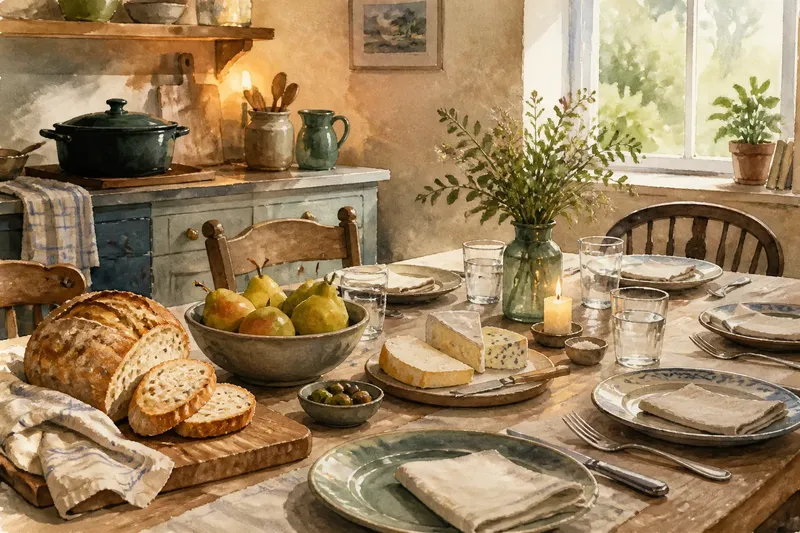
A loaf on the board, a bowl of apples, and a few mismatched plates can make a kitchen feel ready before the first knock. A supper table ready for unhurried company is less about arranging a perfect display than deciding what can wait on the table and what should happen when everyone is there.
Start with the occasion, not a menu template. A neighbor dropping by after a long walk needs a different welcome from friends settling in for the evening, and both can be generous without becoming elaborate. The useful question is: what would let you sit down and stay there?
Choose the table plan that fits the occasion
Think about the shape of the gathering before choosing dishes. The right arrangement makes the meal easier to share and leaves you free to join the conversation.
- For a casual drop-in: Set out bread, cheese, fruit, and a spread in their serving dishes. This works when arrival times may vary because people can help themselves without waiting for a formal start.
- For a small seated supper: Put water, napkins, plates, and cutlery in place, then serve a simple main dish from the kitchen. This suits guests who will arrive together and want to settle in around one table.
- For a long visit: Make the meal easy to extend with a pot of soup, a casserole, or a large salad, plus something small to serve later. This gives the evening a gentle shape without requiring a series of courses.
- For a shared meal: Ask each guest to bring one defined contribution, such as a salad, a loaf, or dessert. A clear request avoids ending up with several versions of the same dish and leaves the host to handle the setting and drinks.
These are starting points, not rules. If the table is small, a buffet surface nearby may be more comfortable than crowding serving bowls between place settings. If guests prefer to linger in the kitchen, set the food where that room naturally gathers people.
Set out the things that do not need attention
Make the table useful before you make it pretty. Place settings, drinking glasses, napkins, and a water jug can all be ready ahead of time. A small dish for olive pits or bread crumbs is handy if the menu calls for it; otherwise, leave the space clear.
Choose serving pieces with the food in mind. A wooden board gives bread a natural landing place, while a wide bowl is easier for passing salad than a narrow dish. Keep serving spoons with the dishes they belong to. These small choices save the familiar search through drawers after guests have arrived.
For an invented situation, say you are welcoming two neighbors after their afternoon walk and expect them to arrive at slightly different times. You could set out sliced bread, a bowl of pears, and a covered dish of cheese, then keep a pot of soup warm in the kitchen. The early arrivals have something to nibble, and you can bring the soup out once everyone is ready without abandoning the table to assemble a meal.
Keep anything that needs chilling in the refrigerator until close to serving. A clean tea towel over bread or a fitted lid on a bowl is often enough for items that can sit out briefly. For foods that need particular handling, follow the package label or the maker’s instructions.
Match the menu to your available attention
On a day when you have time to cook, choose a dish that can be finished before the doorbell: a baked tart, a pot of beans, or a tray of roasted vegetables. On a busy day, assemble rather than cook. Good bread, a jar of chutney, a bowl of dressed greens, and a bought dessert can still make a thoughtful supper.
Use one item that needs attention at the last minute, if any. It might be a pan of eggs, a kettle for tea, or a salad that is best dressed just before eating. When everything needs tending at once, the host becomes the kitchen staff. A meal with several ready-to-serve parts is usually more comfortable for a conversation-led evening.
Consider how guests will eat, too. A stew may be welcome on a chilly evening, but it calls for bowls and spoons; a platter of bread, cheeses, and vegetables is easier to graze over a longer visit. If you are unsure about dietary needs, ask in advance in a plain, friendly message and plan around the answers you receive.
Keep the setting comfortable, not formal
Use what suits the room. A cotton tablecloth softens a bare table, but a wipeable surface may be simpler if the meal is informal. Cloth napkins feel generous; paper ones are perfectly sensible when washing up is already a task. Mix plates if needed, but check that there are enough of the pieces guests will actually use.
Leave a little room for elbows and serving dishes. If the table is narrow, put drinks on a nearby sideboard rather than between the plates. A small vase with garden stems can be lovely, but keep it low enough that people can see one another. The best decoration is usually the one no one has to move to pass the potatoes.
Think about the room’s practical comforts. Make sure chairs are easy to pull out, the path to the kitchen is clear, and a lamp or candles provide enough light for eating. If you use candles, place them away from sleeves and anything else that could catch; choose an unlit alternative if the arrangement feels awkward.
What should be ready before guests arrive?
Should every dish be on the table before the doorbell?
No. Set out durable items such as plates, napkins, bread, or a covered bowl, and keep hot food and chilled dishes where they belong until serving. A partly prepared table feels welcoming without forcing the whole meal to wait in place.
What works when guests arrive at different times?
Offer a small self-serve welcome, such as water, bread, or fruit, and choose a main dish that can wait comfortably. Tell late arrivals where to find a drink rather than restarting the meal for each person.
How can a small table stay comfortable?
Keep only the place settings and immediate essentials on it, then serve from a counter or sideboard. A platter passed from person to person can be easier than keeping several bowls in the middle.
What if I do not know what guests can eat?
Ask beforehand and offer a straightforward option that fits the replies, rather than guessing from appearance or habit. Keep serving utensils separate when that helps guests choose confidently.
Leave one small job for the moment
Prepare enough that you can greet people without rushing, but do not try to remove every task from the evening. Pouring tea, bringing out dessert, or slicing the last loaf can give the gathering a natural pause. It also gives guests a chance to offer help if they want to.
When supper is over, keep the cleanup proportionate to the night. Stack plates in one place, cover leftovers, and leave the rest until the next day if that suits your household. A supper table ready for unhurried company is successful when it lets people remain together a little longer, not when every dish is perfectly presented.